

Please see the digital version of the 2025 Annual Report and a downloadable PDF below.
You can also stop by our office for a printed copy!
2025 Annual Report
Use the table of contents or continue reading to see everything in order!
In accordance with federal law and its enacting regulations, any person with limited English proficiency (LEP) has the right to request and receive information related to Extension’s educational programming and services in a language other than English. In order to receive assistance with interpretation and/or translation needs, or any other matter related to language access issues, please contact: oaic@extension.wisc.edu
Welcome Letter
January 7, 2025 – December 37, 2025
Dear Ashland County Leadership, Community Partners & Interested Readers,
UW-Madison Extension connects Ashland County residents to the resources, research, and expertise of the university. In 2025, Extension worked in partnership with county leadership, the Bad River Tribe, local organizations, and community members to address local priorities, strengthen community systems, and improve quality of life across the county. Through these partnerships, Extension continues to provide a strong return on the county ‘s investment by leveraging state, federal, and grant resources while delivering responsive, locally driven programming.
Extension’s work spans the lifespan and supports the complex and evolving needs of Ashland County communities. Educators provide research-based education and facilitation that helps individuals, families, organizations, and local governments make informed decisions, build skills, and take action. Across focus areas-including community development, health and well-being, youth development, and food systems-Extension emphasizes long-term solutions that build local capacity, strengthen partnerships, and sustain impact over time.
A key strength of Extension’s approach is its role as a connector-bringing together partners, aligning resources, and helping communities move from ideas to implementation. Whether supporting community planning efforts, expanding access to healthy food, strengthening family and social well-being, or advancing culturally responsive work in partnership with Tribal communities, Extension helps translate local priorities into meaningful outcomes.
Extension’s work in Ashland County is further strengthened by its connection to a statewide network of educators and specialists, allowing local communities to access a broad range of expertise while maintaining a strong local presence. This model ensures efficiency, responsiveness, and the ability to address emerging challenges and opportunities.
Together, these efforts demonstrate Extension’s role as a trusted, cost-effective partner-maximizing resources, building local leadership, and supporting a resilient and thriving Ashland County.
On behalf of the Extension Ashland County staff,
Mary Pardee, Area 1 Extension Director (Ashland, Bayfield, Iron & Douglas Counties)
Community Development
Lissa Radke
Lissa’s work in Community Development focuses on building relationships between individuals, organizations, and University resources to further the goals of the Ashland County Community. Her programming reaches across Ashland County and some participants include: local farmers, business owners, government employees, outdoor professionals, and passionate community members with big ideas!
Local Food Economy
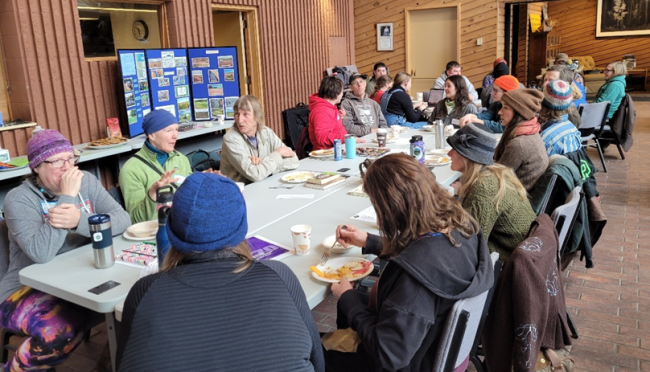
Ashland County prioritizes a strong local food economy as a way to enhance quality of life for community members. Lissa has been working with local farmers and food producers to identify needs and help bring resources to their operations with a goal of connecting consumers to healthy local food.
In 2025, Lissa worked to accomplish:
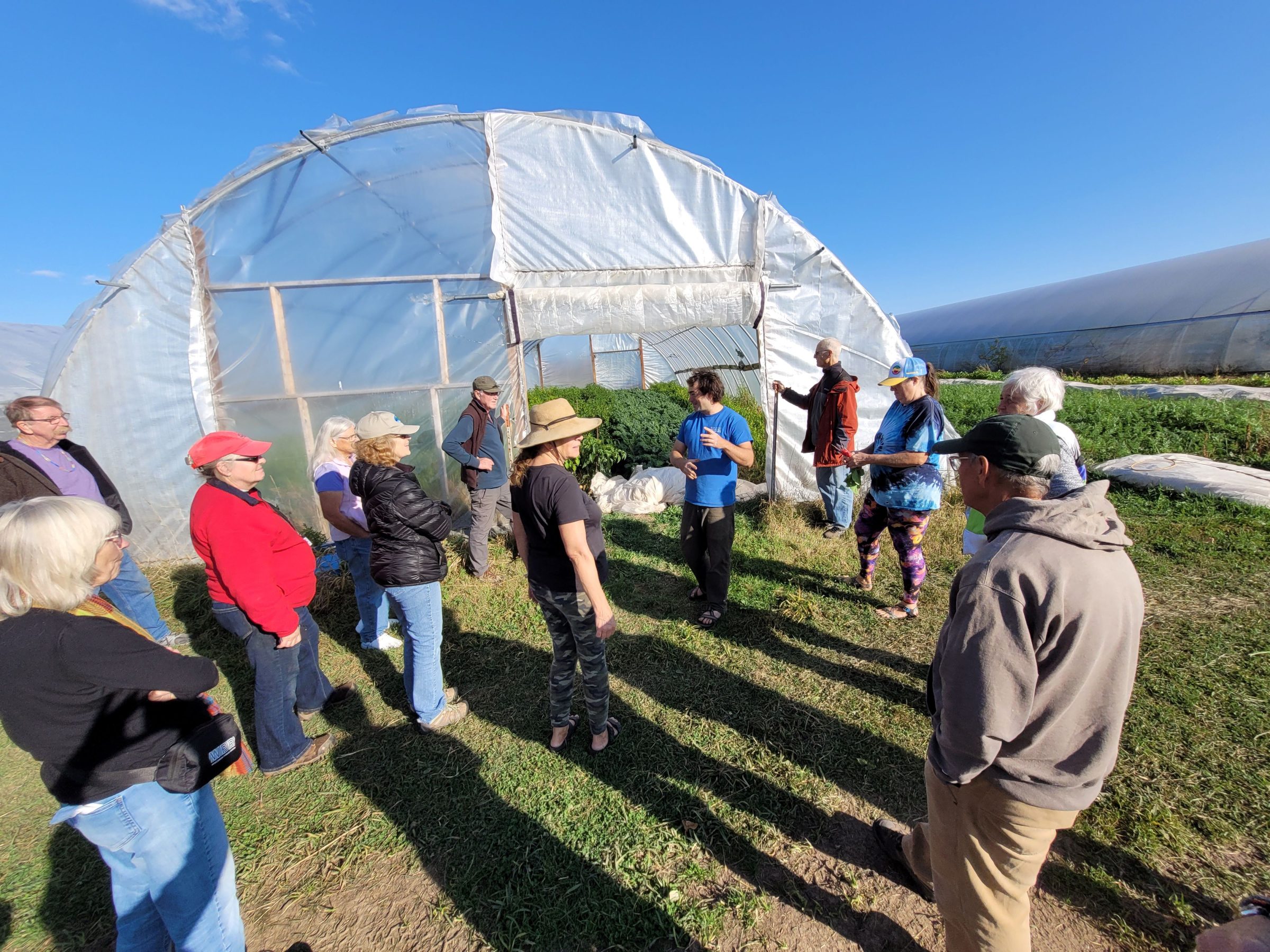
- Farm Tours: Almost 100 people took free tours of 5 local farms to meet farmers and see how food is grown commercially.
- Farmers Gatherings: Around 30 farmers gathered to discuss farm and food market needs to address production and marketing challenges.
- Edible Plant Distribution Planning: Lissa worked with local volunteers and groups to develop a new program called Grow Free: The Giving Garden Project that aims to distribute free perennial edible plants to share with people who need food.
Comprehensive Plan
Review Process
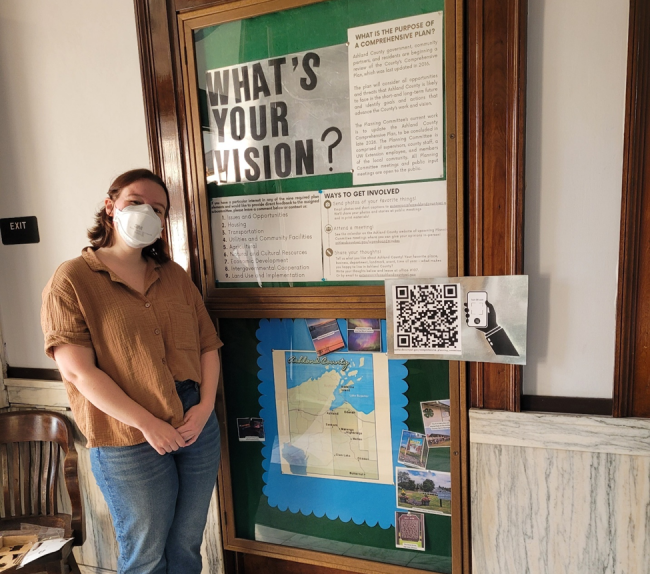
The County’s Comprehensive Plan outlines the vision, goals, and actions for how the County will manage community and economic development. In 2025, a Planning Committee of elected officials began a required 10-year review process.
- Lissa is a member of the County’s nine-member Planning Committee.
- Responsible for promoting the plan, public meetings, and an online survey to hear citizen opinions about the next 10 years of development.
- Lissa worked with Extension’s Office Manager, Blake, to develop an easy-to-follow bulletin board and handout about the comprehensive planning process for Courthouse visitors.
Cleansweep Event
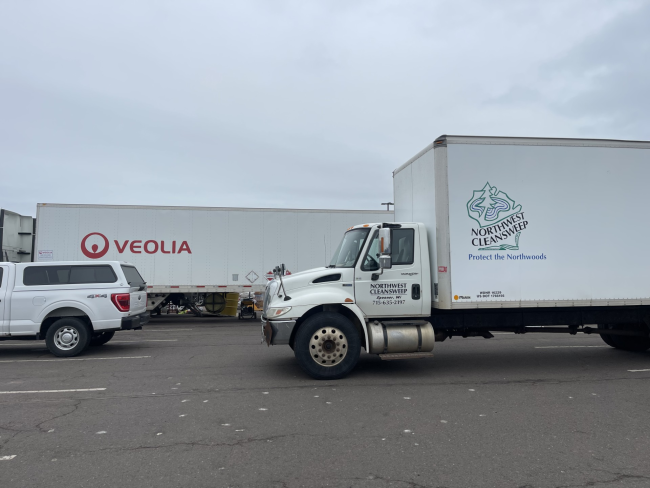
2025 was the 30th anniversary of the Cleansweep Hazardous Materials Collection Event! To celebrate 30 years of annual collections of toxic household waste in Ashland County, Extension received grant funding from WI DNR to add electronic devices to its collection. Participants brought in many kinds of electronic items-from cell phones to microwaves and massive TVs.
- Over 350 participants from 4 counties brought in 24,000 pounds of electronic materials and 11,000 pounds of hazardous materials, which came from households, farms, and businesses.
- As thanks for participating, we gave away 100% recycled pencils and bottles of homemade nontoxic weed killer to promote sustainable products and practices.
- Partners included: Dynamic Recycling, Northwest Regional Planning Commission, Ashland High School, Northwood Technical College, Northlakes Community Clinic, and a dozen local volunteers.
Emergency Preparedness
All communities and many households in Ashland County have been impacted by extreme weather or emergencies, making it important to find ways to reduce damages by learning how to be better prepared. Lissa celebrated FEMA’s National Preparedness Month of September with educational opportunities:
- Conducted two new mini-classes: one to help household members prepare their own “go bags” with items needed during a house evacuation, and one to help with making a critical document bag to ensure all important personal and household papers are compiled and ready to go in an emergency.
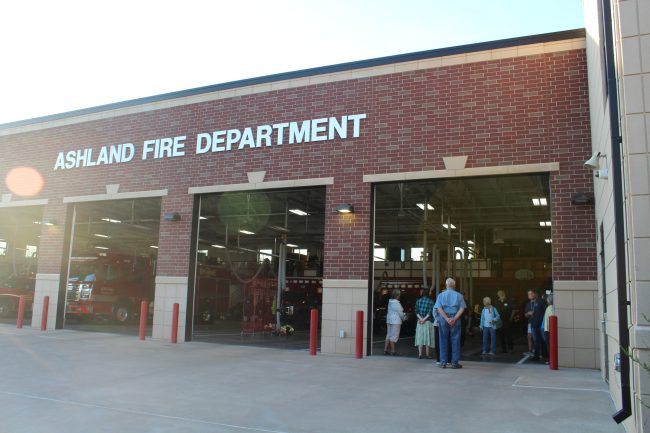
- Partnered with the Ashland County Emergency Management department and the Ashland Fire Department to provide a tour of the firehouse (pictured to the right) and learn how to protect a home from fire and health emergencies.
- Partnered with the Town of Marengo to present the mini-classes about go bags and critical documents; and helped the town develop a new five-part series of preparedness programs to reduce risk during wildfires, house fires, and power outages.
Human Development & Relationships
Heidi Ungrodt
Heidi Ungrodt works with the Human Development and Relationships Institute to support resilient individuals and communities through research-based education and local partnerships. Heidi serves Ashland and Bayfield Counties, providing programs and resources for parents, caregivers and older adults.
Lifespan Programs
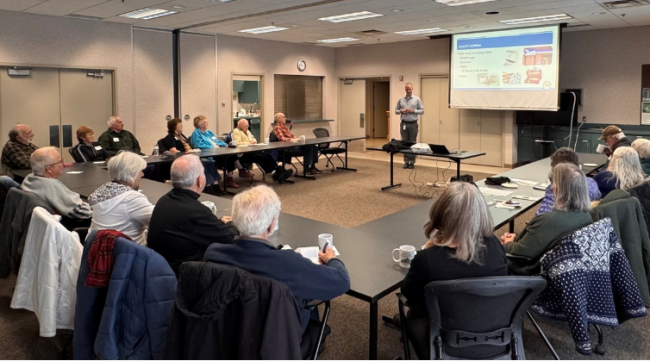
Lifespan programs support healthy aging, family caregiving and aging-friendly communities. In Ashland County -where over 30% of residents are 65+ – these efforts foster an inclusive environment for older adults.
- Aging Mastery Program: AMP is a National Council on Aging curriculum designed to support healthy aging through topics related to wellness, finances, personal growth, and community involvement. In 2025, the program was offered for 19 older adults at the Northern Great Lakes Visitor Center through 8 weekly sessions.
- Art of Aging: These sessions are offered the first Friday of (most) months at the Visitor Center. In 2025, topics included: Safe Online Shopping, Social Connectedness, Communicating Across Generations, and Aging In Place, among others.
Family Engagement
Decades of research show that high-quality parenting is linked with children’s healthy development, social and emotional skills, and health and wellness across the lifespan. There were two New Parent Programs in 2025!
- Circle of Security Parenting: Based on decades of research on strengthening secure parent-child relationships, Circle of Security Parenting™ (COSP) helps parents respond more effectively to their young children’s emotional needs while building self-esteem and secure attachment. Heidi was trained in COSP in Spring 2025 and offered the class virtually in Fall 2025 to local parents of children ages 0-5. The program will expand in 2026 to include both virtual and in-person options.
- Strengthening Families Program: This evidence-based program supports parents of teens with skills to reduce substance use and strengthen family relationships. In 2025, SPARK was awarded DHS grant funds to train staff and partners to offer the program in Ashland. Extension and SPARK partnered to offer the program to 12 parents. Participant feedback was positive, with all parents indicating they strongly agreed they would recommend the program to other parents.
I have learned to be more open minded and use more open ended questions in relating to my son. It’s been helpful using some of the techniques we talked about during these courses.
It gave me time to reflect on my communication style and why our communication was breading down and (my child) was shutting me out.
In addition to new parent programs, these programs remained strong in 2025:
- Triple P Positive Parenting: evidence based classes to strengthen parent-child relationships, manage behaviors and prevent problems from developing.
- Raising Wisconsin’s Children: monthly learning series on timely parenting topics like screen time, self-control, and more.
- Trauma Informed Caregiving: an 8-session program helping caregivers understand trauma and use practical strategies to support healing and healthy development.
- Co-Parenting Education: Parents Forever and Resilient Co-Parenting offer skills and monthly support.
- Literacy Link: promotes literacy focused interactions between children and their justice-involved parent, including book recording sessions and Parenting Inside Out classes at the Ashland County Jail.
Healthy Communities
Marisa Dyer
As the Healthy Communities Coordinator, Marisa Dyer’s work focuses on advancing community-led strategies related to food access, nutrition standards, Farm to Early Care and Education, Produce Prescriptions, physical activity supports, and Harvest of the Moons. In 2025, Marisa’s work emphasized relationship building, technical assistance, early implementation, and coordination with tribal programs and community organizations.
Local Food Distribution
In early 2025, broad uncertainty related to federal funding created concern for local food distribution sustainability. In response, Bad River took proactive steps to stabilize resources by applying for and receiving an extension of the Local Food Purchasing Assistance (LFPA) grant through December 2026. This extension allows the program to fully utilize previously awarded funds while continuing to support food access, local procurement, and community-based distribution efforts during a period of transition.
As program participation expanded, engagement with the Local Food Marketplace increased significantly. The Local Food Marketplace functions as an online ordering platform where available products were uploaded and community members selected items to build their own food box. By August 2025, 460 individuals were signed up through the platform, with approximately 100-200 orders placed during each active ordering week. While the system increased access to a variety of foods, it also presented ongoing challenges related to product availability, ordering timelines, and system usability, as reflected in participant survey feedback.
By December 2025, the model evolved further into a product pick-sheet system supported by a personal shopper approach, a model aligned with participant preferences identified in end-of-year survey findings. This work expanded more broadly in support of Bad River LFPA and Food Sovereignty initiatives during ongoing food system transitions and emergency response efforts. Contributions included coordination of food box distribution, development of healthy and culturally relevant recipes, and improvements to internal processes that strengthened program efficiency, food preservation, and participant experience.
Healthy Food Environments
Throughout 2025, substantial effort went into supporting healthier food environments across multiple community settings:
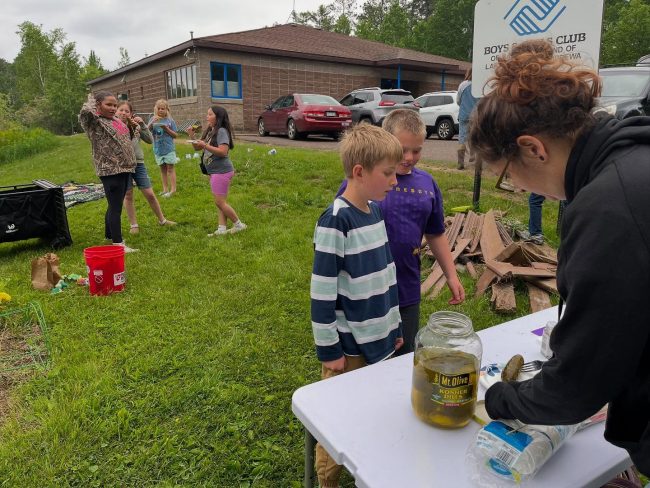
- Bad River Boys & Girls Club: work focused on developing nutrition policies and reinforcing access to fresh, local foods and meals, supporting programs such as Chefs in Training and Garden Club, and identifying training and technical assistance needs related to nutrition standards, food preparation, and practical food service support.
- Headstart: work focused on nutrition policy conversations, readiness-building, and support for healthier food service practices. Existing policy materials were reviewed, and planning moved forward through conversations about readiness for policy drafting and implementation support. While staffing and scheduling affected the pace of progress, the work continued through staged planning and partner coordination.
- Elder Center and Health & Wellness Clinic: efforts focused on nutrition policies, local food access, and broader wellness supports. Collaboration with the Bad River Clinic Dietitian included discussion of improvements to the Produce Prescription referral process and opportunities to expand.
Federally Recognized Tribal Extension Program (FRTEP)
Joy Schelble
Joy Schelble has been providing healthy lifestyle programming and community food system development support to the Bad River Tribe for the past 11 years. Joy works with the Bad River Community to help further food security and health by providing health and wellness education and opportunities to access healthy and culturally important foods for all tribal members. It is also important that all education incorporates Ojibwe language in classes and class materials. Joy works with language speakers and learners to further the tribe’s efforts of language and cultural restoration.
Local Food Distribution
In 2025, Joy has been involved in the continued development of a new tribal farm, the completion of a certified commercial community kitchen, and the Local Food Distribution Program. These food giveaways have served over 700 tribal members with locally produced meat, dairy, vegetables, and fruits.
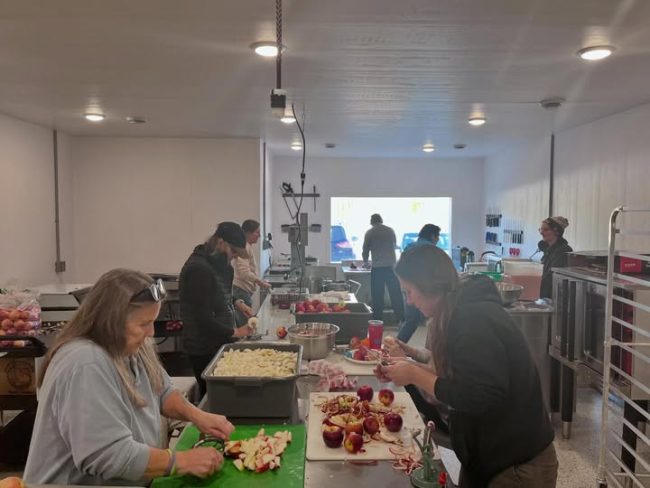
One 2025 success was securing the donation of 18,000lbs. of apples from two Bayfield orchards for community distribution. Volunteers and staff picked apples, sorted, processed into sauce and chips, packaged for distribution, and delivered to all of the programs that provide support to the community.
FRTEP coordinates and hosts an Advisory Board made of community elders who advise on food giveaways and educational programming at the facility. They also advocate and report to tribal council on successes and needs.
In addition, FRTEP helped to organize professional development opportunities for Bad River Food Sovereignty staff In 2025, the group was able to tour several Ho Chunk Nation farms, gardens, and food processing and distribution facilities to learn systems, equipment, training and staffing needs for further food system development in Bad River.
Collaboration with Bad River Food Sovereignty Program
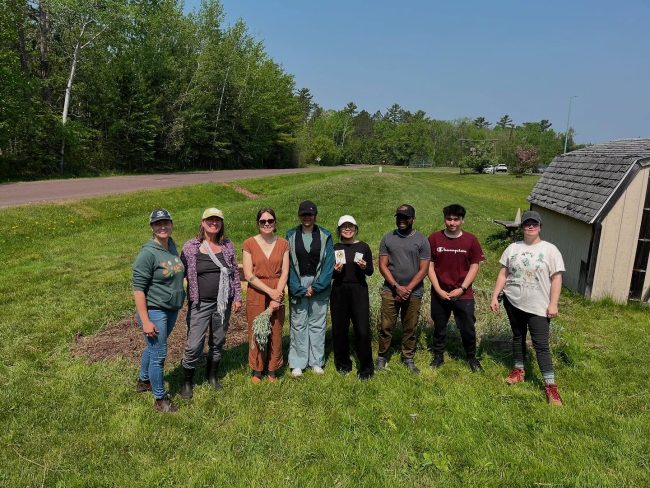
FRTEP works closely with the Bad River Food Sovereignty Program (BRFS) to develop educational events to learn about food and medicine harvest, processing, and preservation.
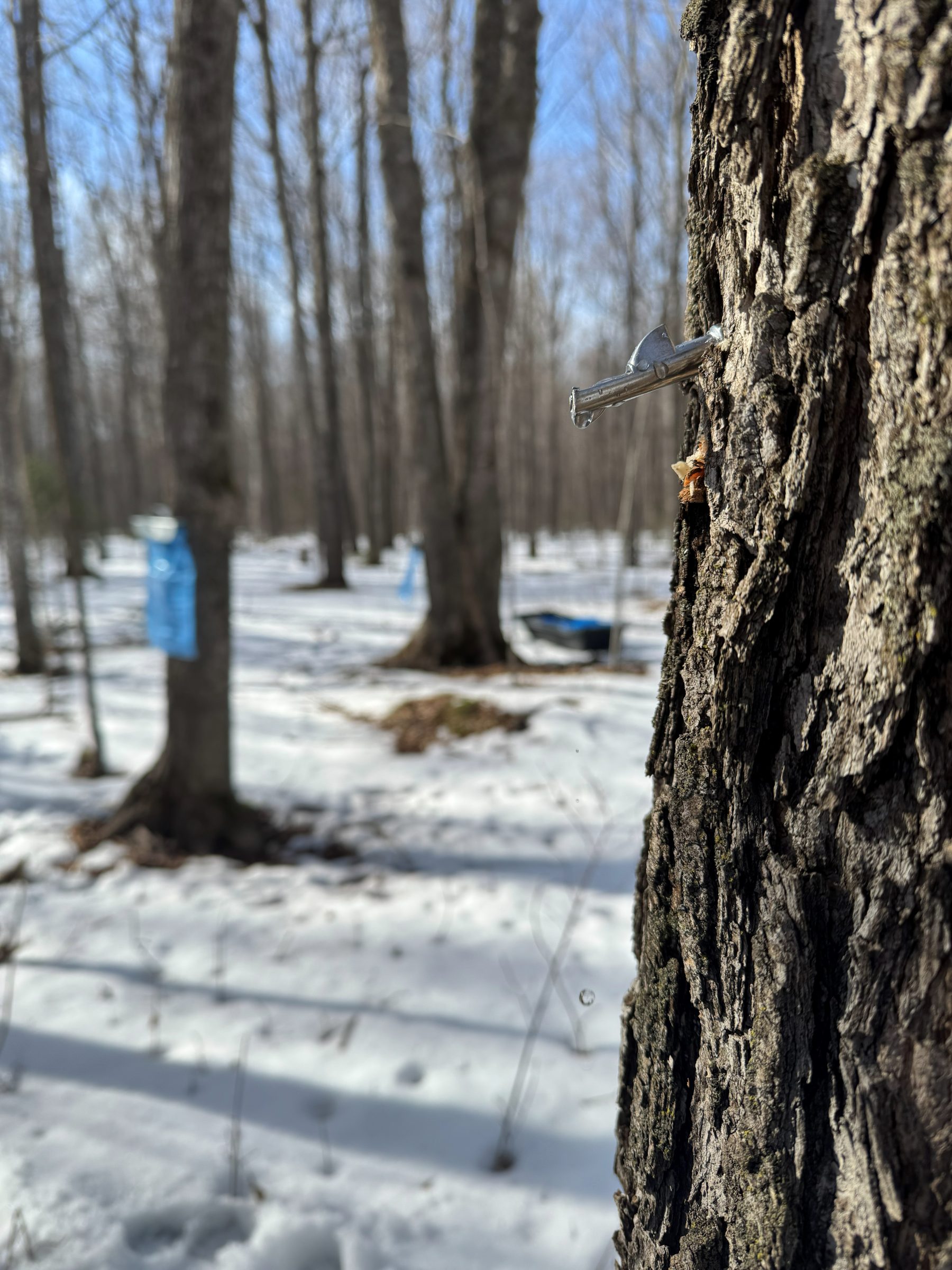
Joy partnered with BRFS and Genawendang Aki to provide education for youth and families including harvesting opportunities: community maple sugaring program, youth wild rice harvesting, plant medicine id and preparation, a plant and seed giveaway, and the construction of 30 home gardens in 2025. This is the third year of our Home Garden Program and we have built 98 gardens so far using FRTEP resources!
Joy also collaborates with Bad River Clinic, Bad River Social Services, CDC, Department of Health Services, and other Extension program areas to align resources, create more direct access to healthy food, and design education for the community that complements the foods distributed through giveaways and the Tribal Elder Food Box Program.
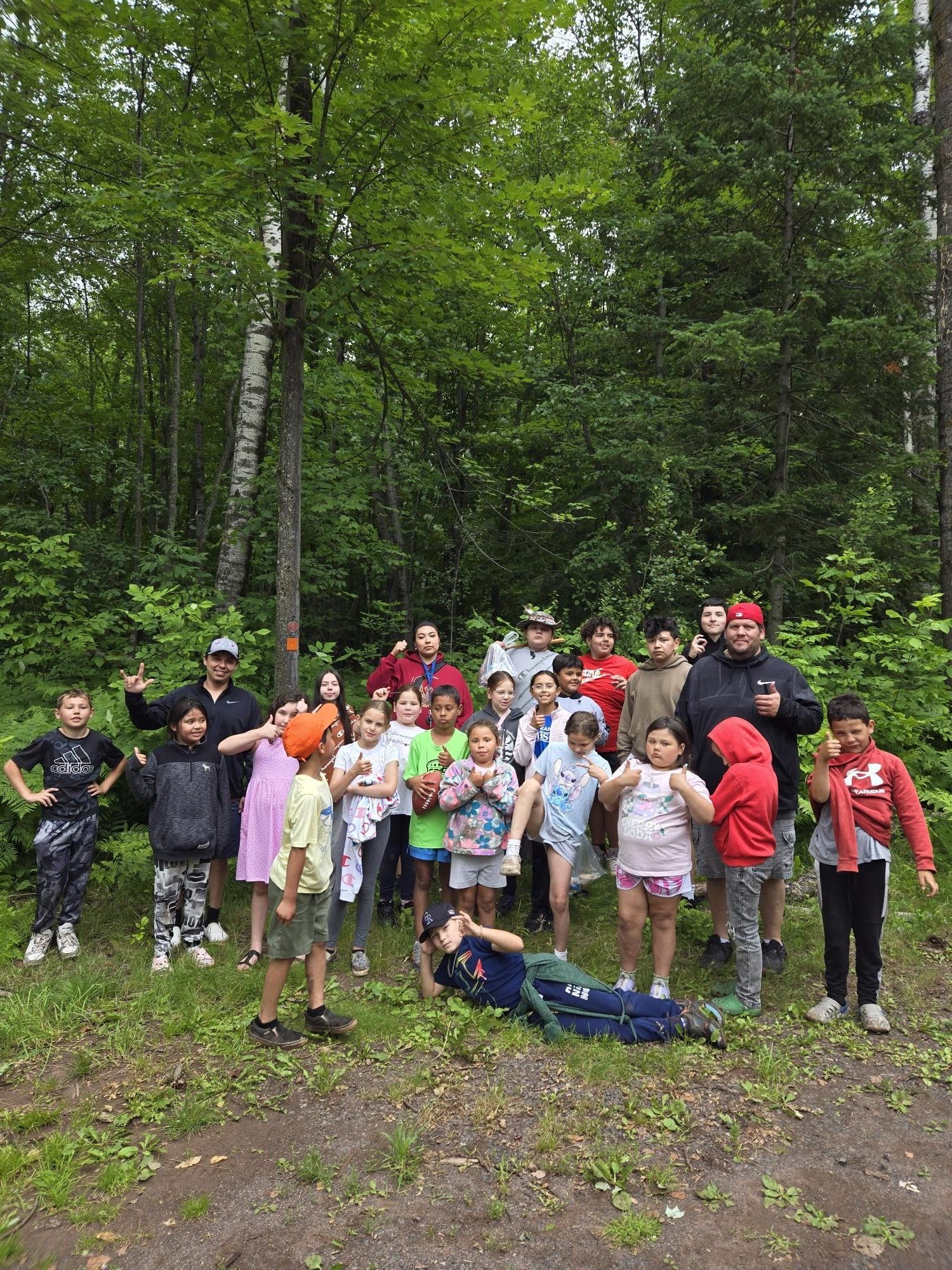
Take a Hike!
This year marked the 20th year of the Take a Hike Program, a collaboration with the Bad River Boys and Girls Club.
This signature program has given kids a chance to get out and be active as well as learn about our many wonderful regional hiking trails and wilderness areas. It is also an opportunity to help young Ojibwe tribal members understand and use treaty rights to harvest berries and plants on public lands. In collaboration with Ashland County 4-H, we also offered a Canoe and Water Safety Program as a part of Take a Hike for the 10th year.
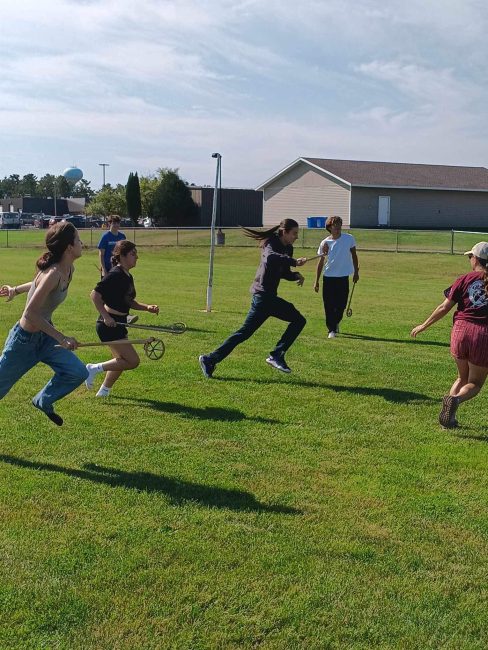
Baaga’adowewin
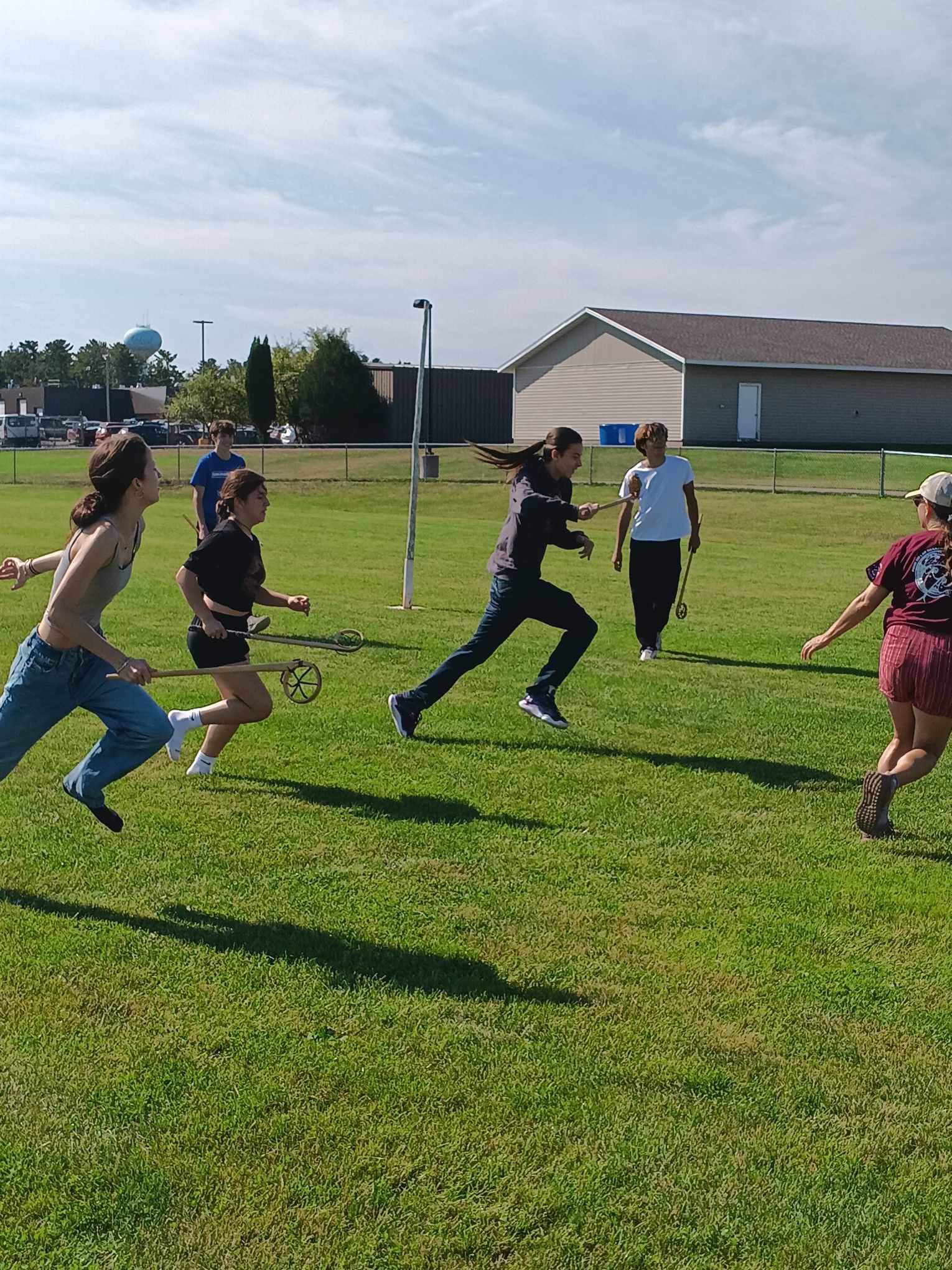
Joy has played an important role in the resurgence of the traditional Ojibwe lacrosse game for Bad River youth.
Tribal leaders, parents, mental health support services, the Wisconsin Department of Justice, and the school district have all recognized the importance of this youth mental health work and its contribution to ensuring that the district is in compliance with Act 31, which requires culturally relevant education for all Wisconsin public school students.
Joy helped secure an $85,000 grant to support a Native lacrosse coach and stick maker for two years serving the schools and the Bad River Community. This program was so successful in offering culturally rooted youth mental and physical health that WIDOJ awarded an additional $10,000 and a time extension to allow for thoughtful capacity building for a tribally funded and housed position to continue this good work long into the future.

Money that has been brought to Ashland County directly from FRTEP or with assistance from FRTEP in 2025:
$95,000
Supported the Ojibwe Lacrosse Coach position
$36,000
Gleaned apples distributed to community members and food security programs
$2,500
For home garden support through community donations
$80,000
For FRTEP federally funded wages and program resources supporting purchases from local businesses and vendors
$68,000
Of in-kind donations of volunteer time
Totaling $281,500
brought to Ashland County in 2025 via the Federally Recognized Tribal Extension Program (FRTEP)
4-H Youth Development
Dave Ullman
Dave Ullman started in the role of 4-H Program Educator in December 2025 after the 4-H Program’s brief pause from August-November. Dave brings an extensive background in experiential education and a deep commitment to our northern communities. He looks forward to supporting Ashland County youth in exploring their diverse goals and interests!
Dave spent the beginning of his time in the Ashland County 4-H world by supporting the CANSKI Club! As an experienced volunteer prior to starting the 4-H Educator Position, Dave supported nearly 40 Ashland County CANKSI Club participants this winter! The CANSKI program is a long-standing Nordic ski partnership program between Ashland and Bayfield 4-H and supports all participants, from those who are taking their first steps on skis, to encouraging young skiers participating in the State Meet of the Wisconsin Nordic Ski League.
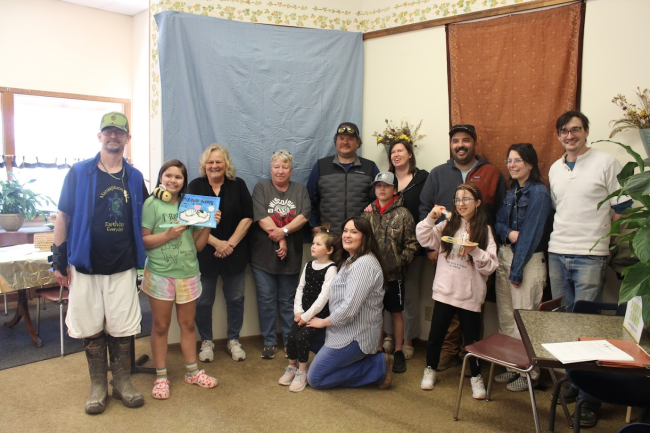
Spring
In Spring, 4-H had the Annual Spring Art Contest and Awards Celebration Event at Stone Soup Cafe in Ashland! The 2025 Topic was Animal Kingdom using mixed media! Judges Jen Weiler and Joni Chapman took careful time and consideration in providing feedback to youth artists!
Summer
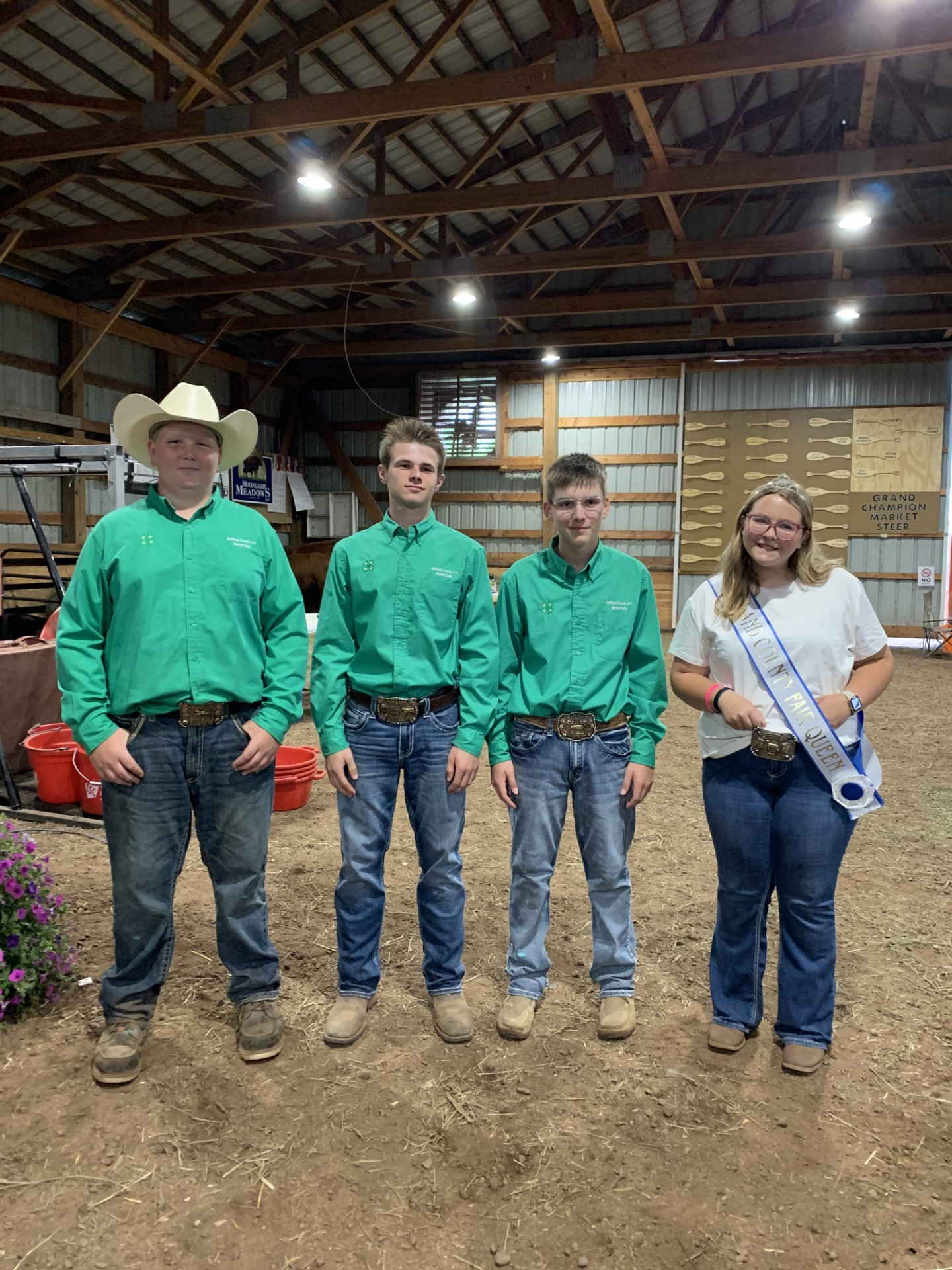
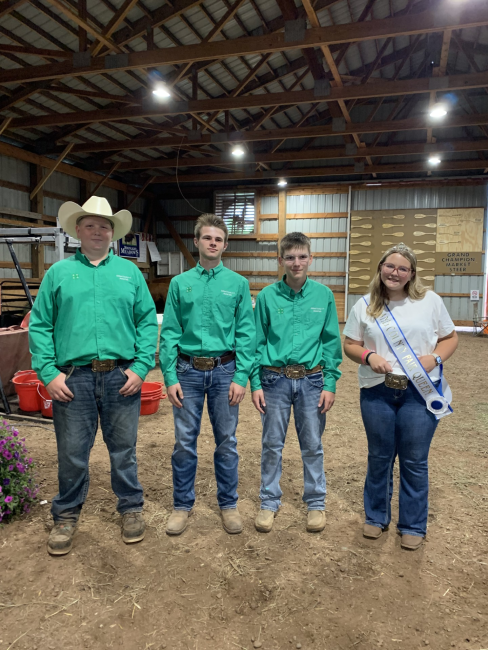
In Summer, 4-H attended the County Fair! Youth Members sold animals & pies at auction, showed projects in the youth exhibit hall, and enjoyed the fair alongside their families! The Ashland County 4-H Office also said goodbye to our Educator, Kate Wallner, who had been with us since 2022!
Fall
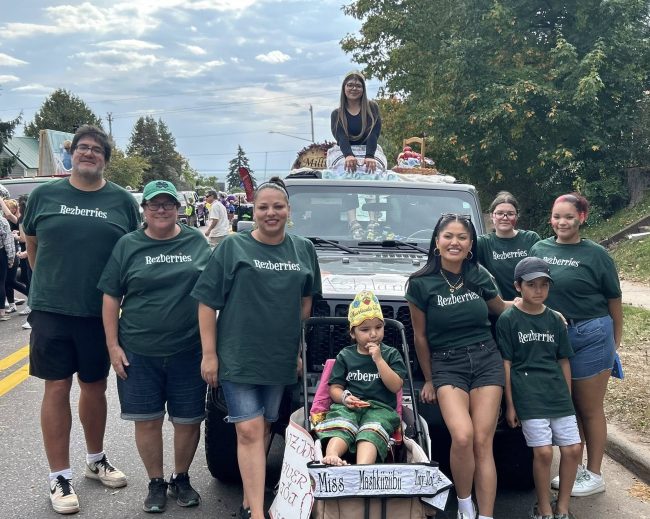
Fall was unusually slow for Ashland County 4-H! One highlight is the Rezberries Club representing 4-H in the Annual Bayfield Apple Festival Parade! Youth completed applications, Clubs completed Annual Financial Reports, and the 4-H Office completed interviews for a new Educator!
Winter
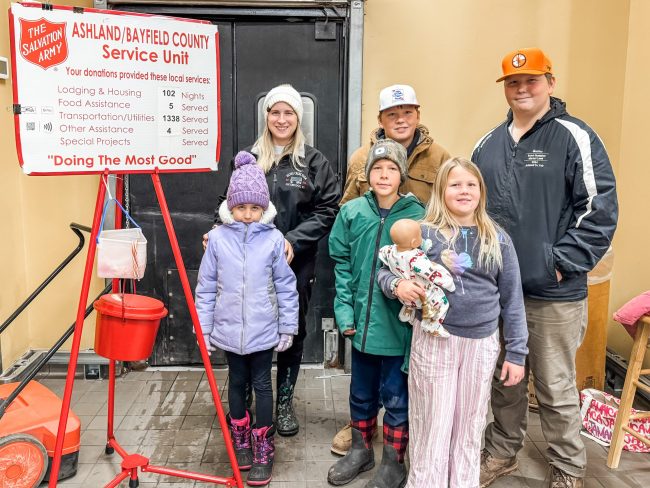
This Winter saw the arrival of some lovely snowy weather, as well as our new 4-H Educator Dave Ullman! 4-H Families spent holiday time with loved ones, donating time volunteering, and gearing up for the CANSKI Club’s favorite season!
FoodWIse
Stephanie Bakker and Lindsay Larson
Healthy Choices Healthy Lives
For more than 30 years, UW-Madison Extension has provided local nutrition education across Wisconsin through the federal SNAP-Ed grant program. The congressional budget reconciliation bill signed into law on July 4, 2025 ended federal SNAP-Ed funding, effective September 30, 2025.
Working with schools, food pantries, farmers markets, and community centers, FoodWlse has taught practical, evidence-based skills in meal planning, food safety, and food resource management, helping people stretch food dollars and make healthier choices. We are grateful for our partners and participants and the opportunity to advance healthier communities in Ashland County. UW-Madison Division of Extension works alongside the people of Wisconsin throughout urban and rural communities to deliver practical educational programs where people live and work. In Ashland County, FoodWlse partners with schools, after-school programs, Head Start programs, senior meal programs, and food pantries to help make the healthy choice the easy choice in our communities.
Ashland County Impacts in 2025
We shared out many resources in 2025, one of the most widely distributed was our monthly newsletter. Each month, our newsletter would include information on food security resources, Harvest of the Month materials, recipes, programming updates, and general health and well-being information. As we have done in years prior, we offered virtual StrongBodies strength training series throughout the year in collaboration with other FoodWIse teams.
We continued to be engaged and helped to facilitate our local food educator coalition, FERN (Food Educator Resource Network). Site visits in 2025 included touring the Hulings Rice Center and the hazelnut processing system, Cable Community Farm, Bad River Fish House, and the Bad River Health and Wellness Center addition. Additionally, we had occasional networking meetings to connect on community needs, upcoming community programming, professional development opportunities, and more.
20 Years of Take a Hike
Twenty years ago, a simple idea took root: get kids outside, moving, and making healthy choices. Launched as a collaboration between SNAP-Ed and the Bad River Boys and Girls Club, Take a Hike began with a mission: promote physical activity, healthy snacks, and hydration. Through guided hikes and nutrition-focused activities, youth learned to care for their bodies while exploring the world around them. Now, two decades later, the program is celebrated its 20th anniversary! Over the years, Take a Hike expanded to reflect the values and traditions of the community. Today, it includes: Treaty Rights and Harvest Education, Ojibwe Plant Knowledge, Canoe and Water Safety
This evolution reflects a broader understanding of health-one that includes cultural identity, land stewardship, and intergenerational learning. The program’s expansion was made possible by new partnerships, including: 4-H, FRTEP (Federally Recognized Tribes Extension Program), and Bad River Food Sovereignty Program. Together, these partners have helped Take a Hike grow from a wellness initiative into a movement rooted in community, culture, and connection. To mark the 20th anniversary, Boys and Girls Club staff, youth, and partners gathered on Madeline Island-a place rich in Indigenous history. It was a joyful, reflective day that brought together generations of participants and partners to celebrate twenty years of Take a Hike.
What does the future hold?
The Health & Well-Being Institute is restructuring how it delivers nutrition education while exploring new funding and partnership opportunities to sustain this work. EFNEP programming will continue in several counties, and the Institute will maintain other health education efforts such as StrongBodies. FoodWlse remains committed to empowering Wisconsin communities, and SNAP-Ed has played a meaningful role in improving health across the state. We appreciate the continued support for our staff, programs, and mission; partner organizations or media may contact Kathryn Boryc Smock, FoodWlse State Program Manager and Health & Well-Being Institute Associate Director, at kathryn.boryc@wisc.edu.
FoodWlse education is funded by the USDA Supplemental Nutrition Assistance Program – SNAP and Expanded Food and Nutrition Education Program -EFNEP. An EEO/AA employer, University of Wisconsin-Madison Division of Extension provides equal opportunities in employment and programming, including Title VI, Title IX, the Americans with Disabilities Act (ADA) and Section 504 of the Rehabilitation Act
2025 Budget
In 2025, the work of the Ashland County Extension office was completed by 7 educators and 1 full-time office manager. Our staffing can change over the course of the year – needs change with the time of year, funding availability, vacancies, and special opportunities. Over the course of a year, Extension touches a lot of community needs!
Local educators are part of a statewide network that supplies programming support, topic expertise, professional development and funding. Ashland County benefits from the expertise of statewide Extension specialists on topics such as economic development, agriculture, and climate change.
The success of Ashland County Extension programming relies on four aspects:
County Funding, State Funding, Volunteers, and Donations, Grants & Fees
In Extension, local educators are co-funded by the county and state. County funds help to outfit Extension with office supplies, technology, and program and travel costs. Providing valuable support to our programming efforts is our Office Manager, an Extension staff member fully funded by the county.
FoodWlse, our nutrition education program, was paid for by federal SNAP-Ed (Supplemental Nutrition Assistance Program Education) funds that came through UW-Madison Division of Extension. (Federal funding for this program was discontinued on September 30, 2025.) Ashland County and the Bad River Band of Lake Superior Chippewa host our FRTEP Educator, which is a federal grant. Ashland County is also benefitting from a 5-year grant to Extension from the CDC to address obesity and nutrition, through the work of a Healthy Communities Coordinator. County funds are not involved in the salaries of the FoodWlse Coordinator, FoodWlse Educator, FRTEP Educator, Healthy Communities Coordinator or Area Extension Director.
2025 By The Numbers
$137,206 County Funding
$75,146 = Co-Funded Staff Fee
$55,373 = Support Staff
$1,774 = Office & Technology
$4,913 = Educational Program Support
$378,422 State Funding
$94,187 = Co-Funded Staff Salary/Fringe
$73,326 = FoodWIse Staff & Program
$84,000 = FRTEP Staff & Program
$84,481 = Healthy Communities Program
$2,096 = Program Support
$5,499 = Professional Development
$34,833 = Director Salary/Fringe
$8,000 Other Funding
$8,000 = Donations, Grants, Fees